
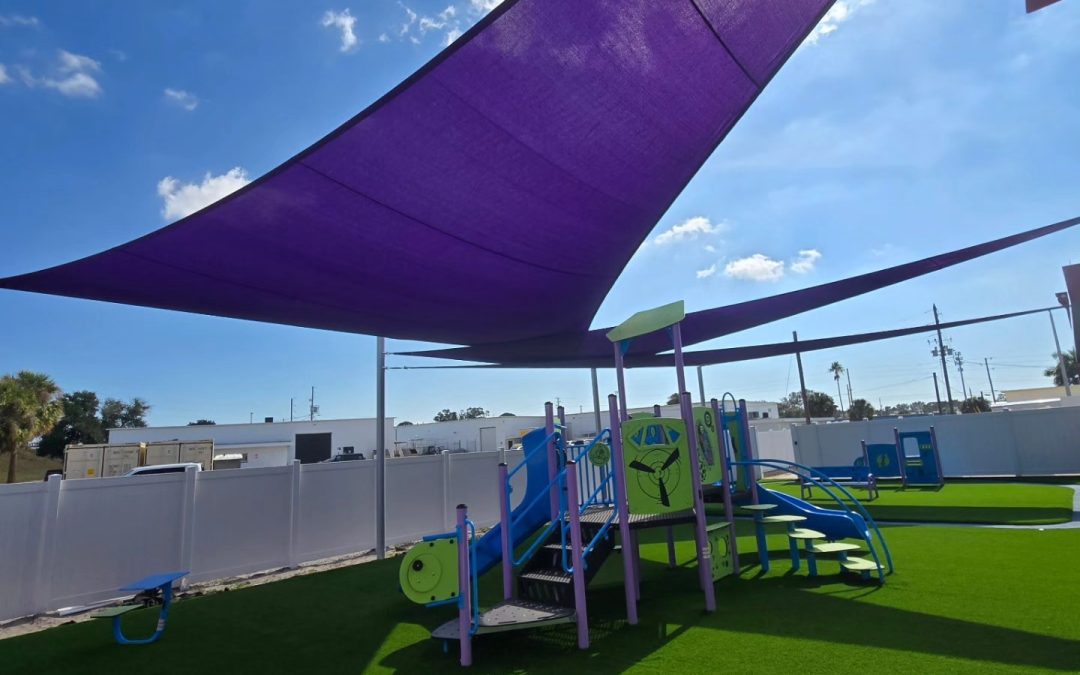
In sunny climates like Florida, shade sails aren’t just a stylish addition—they’re a necessity. Whether they’re installed over playgrounds, patios, pools, or parking areas, shade sails help create cooler, more comfortable spaces while protecting people and property from harmful UV rays.
But many customers ask us the same question: How does heat affect fabric shade sails?
At Creative Shade Solutions, we engineer our structures to withstand extreme temperatures and understanding how heat interacts with shade fabric is key to long-term performance.
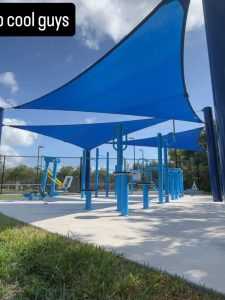 1. Heat Increases Fabric Tension — and That’s a Good Thing (Within Limits)
High-quality HDPE (High-Density Polyethylene) shade fabrics are designed to tighten when exposed to heat.
During hot months, the material expands slightly, allowing the sail to “lock in” and maintain a smooth, taut appearance. This tension is essential because:
-
It prevents flapping or sagging
-
Reduces the risk of wind damage
-
Helps the fabric shed debris and rain more efficiently
However, proper design and installation are critical. Anchoring points must be strong enough to handle increased heat tension without warping or failing. At Creative Shade Solutions, we engineer all posts, footings, and hardware to meet or exceed Florida’s environmental demands.
2. UV Exposure Plays the Biggest Role in Fabric Longevity
The real challenge isn’t just heat—it’s UV radiation. Over time, constant sun exposure can weaken low-quality fabrics, causing:
-
Fading
-
Brittleness
-
Reduced shade coverage
-
Premature tearing
That’s why we only use premium UV-stabilized fabrics rated to block up to 95% of UV rays. These materials are specifically designed to withstand the intense heat and sunlight common in the southern U.S., ensuring long-lasting performance and color retention.
3. Heat Can Affect Color—but Quality Fabric Makes a Difference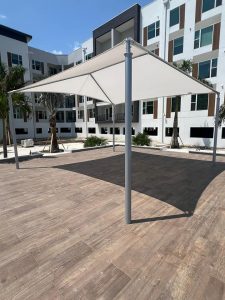
All outdoor fabrics will eventually show some color change after years of intense sun exposure.
The degree of fading depends on:
-
Fabric quality and UV stabilizers
-
Color choice (lighter shades fade slower; darker shades hold heat)
-
Installation angle and exposure
Creative Shade Solutions provides fabric options proven to resist fading even in extreme heat, helping maintain a fresh, professional appearance for years.
4. Hot Weather Can Highlight Poor Installation Techniques
Heat tends to expose any weak points in a shade sail system. If a sail is not installed correctly, you may notice:
-
Wrinkling
-
Sagging during rain
-
Uneven tension
-
Stress points at corners
Professional installation ensures your shade sail remains stable even as temperatures rise. Our installers use high-tension equipment and commercial-grade hardware, so your system performs flawlessly through every season.
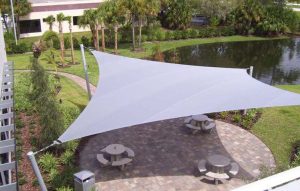 5. The Right Fabric Makes All the Difference
Not all shade fabrics are engineered the same. At Creative Shade Solutions, we use architectural-grade HDPE fabrics such as Commercial 95 and other top-performing materials that are:
-
Heat-resistant
-
UV-stabilized
-
Breathable to allow hot air to escape
-
Mold and mildew resistant
-
Designed for high wind loads
These fabrics are tested to perform in temperatures up to 140°F and beyond, making them ideal for Florida’s climate.
6. Heat Can Improve Comfort—When the Shade Sail Is Designed Correctly
Ironically, heat makes shade sails work better. By blocking direct sunlight, fabric sails can reduce ambient temperatures beneath them by 15–20 degrees, improving comfort in:
-
Playgrounds
-
Pool areas
-
Outdoor cafes
-
Carports
-
Parks and recreation areas
A well-designed shade solution doesn’t just protect from UV rays—it creates a noticeably cooler environment, even on the hottest summer days.
Heat is a constant factor in Florida, but with the right materials and expert installation, shade sails can thrive in even the harshest conditions. At Creative Shade Solutions, we engineer every project to resist the long-term effects of heat, sunlight, and wind—ensuring durability, performance, and comfort for years to come.
If you’re considering adding a shade sail to your property or need an upgrade from an older system, our team is here to help you choose the best fabric and design for your environment.